
Delhi Court Sends CJP Activists Das and Ranka to Five‑Day Custody
The Special Executive Magistrate court ordered a five‑day judicial custody for CJP leaders Saurav Das and Ashutosh Ranka after they entered the barred Jantar Mantar area. The ruling follows a wave of protests over alleged irregularities in the election roll revision process.
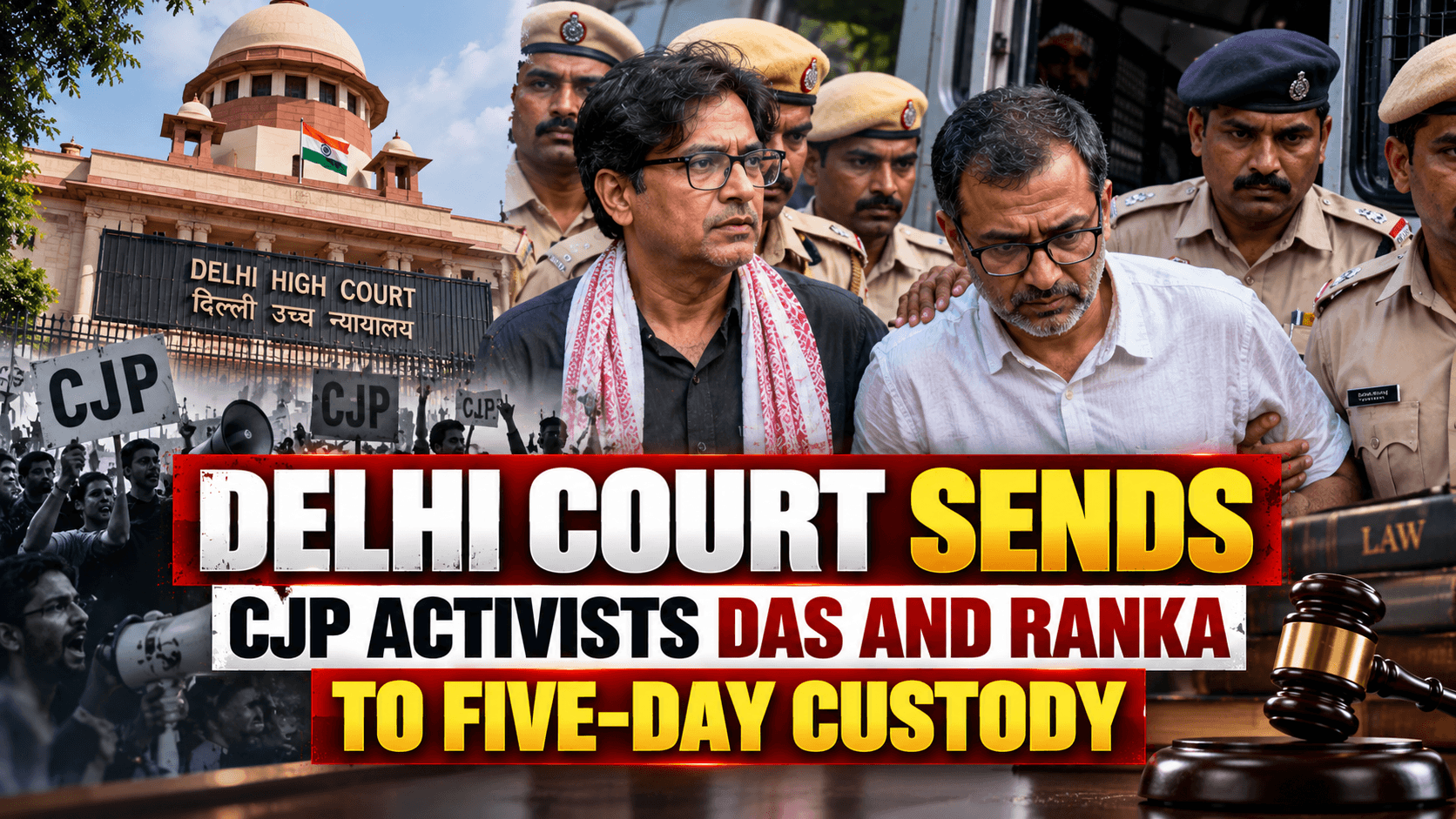
On October 13, 2026, Delhi police apprehended two prominent members of the Cockroach Janta Party (CJP), Saurav Das and Ashutosh Ranka, along with fellow activist Ajinkya Shinde. The trio allegedly scaled the barricades at Jantar Mantar, a site that had just lost its official status as a protest zone.
Legal proceedings and the court's decision
A Special Executive Magistrate (SEM) bench convened on Wednesday to consider the case. After hearing arguments, the magistrate remanded Das and Ranka to judicial custody for five days. Their companion, Shinde, was granted bail and released the same day.
Key points from the remand order
Both activists are to remain in custody until the court reviews the matter on the scheduled return date.
The court emphasized that the entry onto the restricted area constituted a violation of the temporary prohibition order issued by the Delhi administration.
Police officials were instructed to maintain a detailed log of any further interactions with the accused during the custody period.
Why the protest erupted
The CJP’s demonstration was sparked by mounting concerns over the Special Intensive Revision (SIR) of electoral rolls—a process the party claims is riddled with irregularities. In particular, CJP leaders have demanded the resignation of Chief Election Commissioner Gyanesh Kumar, alleging that the SIR exercise has unjustly deleted legitimate voters.
One day after the government withdrew Jantar Mantar’s designation as a “designated protest site,” CJP activists attempted to draw attention to their grievances by scaling the gates, prompting a swift police response.
Broader political backdrop
The incident at Jantar Mantar is part of a larger wave of unrest that swept Delhi on October 10‑11, when numerous youth organisations, political parties, and civil‑society groups rallied against perceived electoral manipulation. The protests were marked by mass arrests, clashes between demonstrators and law‑enforcement officers, and reported assaults on journalists and lawyers.
In the wake of these events, the Supreme Court has become a focal point for a series of petitions seeking redress for alleged police excesses and violations of constitutional rights.
Supreme Court petitions related to the protests
As of mid‑October, at least fifteen petitions have been lodged before a bench comprising Chief Justice of India Surya Kant, Justice Joymalya Bagchi, and Justice V. Mohana. The filings span a variety of legal remedies, including writ petitions, contempt proceedings, habeas corpus applications, and intervention pleas.
Notable petitions include:
MA Baby v. Union of India – Challenges restrictions on Delhi Metro and railway services during the protests, arguing that the Supreme Court’s October 9 direction to regulate, not halt, public transport was ignored.
Shailendra Mani Tripathi v. Govind Mohan – A contempt petition asserting that the closure of Metro stations violated the Court’s earlier order, prompting notices to senior police and transport officials.
Menaka Guruswamy v. Union of India – A habeas corpus petition filed by senior advocate and MP Menaka Guruswamy on behalf of detained political leaders, seeking judicial intervention in their release.
Aman Prasad v. Anurag Kumar – Accuses the Delhi Police Commissioner of excessive force against protestors, especially women and legal practitioners, contravening the Court’s directives on peaceful public movement.
Journalist Amaan Rastogi’s contempt petition – Claims police assault on a reporter covering the demonstrations, violating the Supreme Court’s protection of journalists.
Supreme Court Bar Association v. Union of India – Requests a status report on the alleged detention of advocates near the Supreme Court on October 10, preservation of CCTV footage, and safeguards for courtroom access.
Supreme Court Advocates‑on‑Record Association v. Union of India – Seeks an independent inquiry into the alleged manhandling of lawyers during the protest march, demanding identification of responsible officers.
Petition concerning prohibitory orders under BNSS – Questions the legality of Section 163 of the Bharatiya Nagarik Suraksha Sanhita (BNSS) orders, and the broader police powers invoked during the unrest.
Free Speech Collective petitions – Two separate filings: one seeking contempt action for the forced removal of journalists, another demanding an independent probe, evidence preservation, and compensation for media personnel.
Network of Women in Media, India – Highlights gender‑specific concerns, asking the Court to protect women journalists from arbitrary detention and intimidation.
These petitions collectively underscore a deepening tension between law‑enforcement agencies and civil‑society actors over the right to protest, press freedom, and the integrity of the electoral roll revision.
Implications of the custody order
The five‑day judicial custody for Das and Ranka serves as a microcosm of the broader legal battle unfolding in Delhi. While the activists remain behind bars, the CJP continues to amplify its demands for an audit of the SIR process and the removal of CEC Gyanesh Kumar.
Legal experts note that the court’s decision may set a precedent for how future protest‑related offences are treated, especially when they intersect with contentious electoral reforms. If the Supreme Court’s pending petitions result in stricter enforcement of its October 9 and 11 directions, law‑enforcement agencies could face tighter constraints on imposing transport bans or detaining demonstrators.
What follows next?
The detained activists are scheduled to appear before the SEM court after their custody term expires. Their legal teams are expected to argue that the charge of trespassing should be mitigated by the political nature of the protest and the recent de‑notification of Jantar Mantar as a protest zone.
Simultaneously, the Supreme Court will continue hearing the myriad petitions, many of which are slated for oral arguments in the coming weeks. The outcomes of these hearings could reshape the legal landscape governing public dissent, police conduct, and electoral integrity in India.
For observers, the unfolding drama offers a vivid illustration of the delicate balance between maintaining public order and safeguarding democratic freedoms—a balance that will likely be tested repeatedly as India approaches its next electoral cycle.
Latest Posts
Teen Arrested After Faulty Rifle Foils Hindu Temple Shooting Plot
A 19‑year‑old Taco Bell employee in Illinois was detained after a jammed rifle prevented a planned mass shooting at a Hindu temple. Police recovered weapons, extremist material, and a manifesto outlining white‑supremacist motives.
Supreme Court Notices Challenge to Election Commission’s SIR
The Supreme Court has issued a notice on a petition filed by Rahul Gandhi and other opposition figures contesting the Election Commission’s Special Intensive Revision of voter lists. The court’s order seeks explanations from the petitioners and may pause the SIR process pending further review.
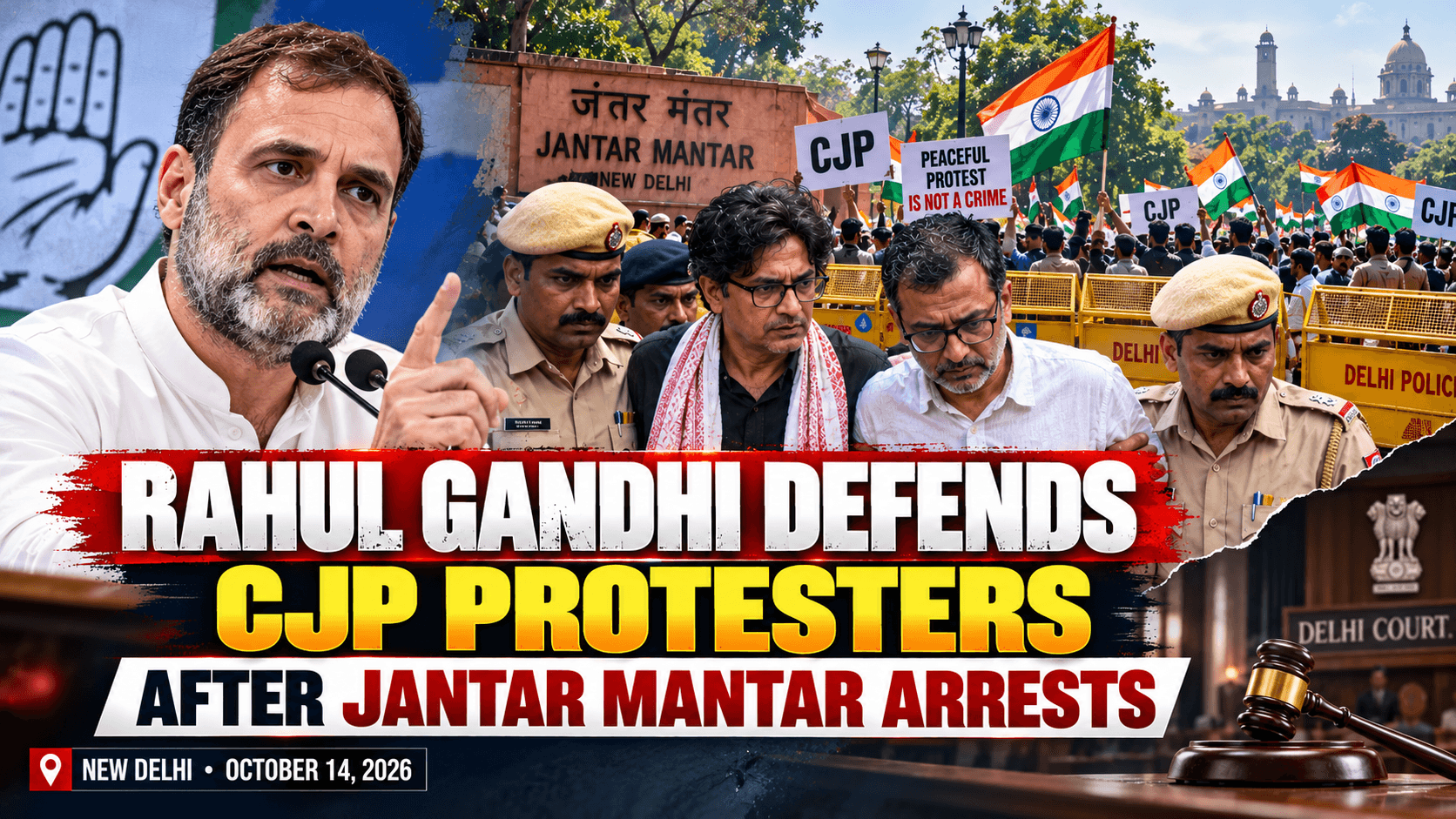
Rahul Gandhi Defends CJP Protesters After Jantar Mantar Arrests
Rahul Gandhi publicly condemned the arrest of Cockroach Janta Party leaders at Jantar Mantar, calling the detention of peaceful flag‑waving protesters a cowardly act. His statement signals a new alignment of opposition forces against the Centre’s decision to de‑notify the historic protest site.

Houthis Renew Missile Barrage on Riyadh, Saudi Air Defences Tested Again
For the third consecutive day the Yemeni Houthi movement launched ballistic missiles toward Saudi Arabia’s capital, prompting interceptions and a renewed shutdown of Riyadh’s main airport. The attacks have strained Saudi air defences, disrupted international flights and raised regional security concerns.
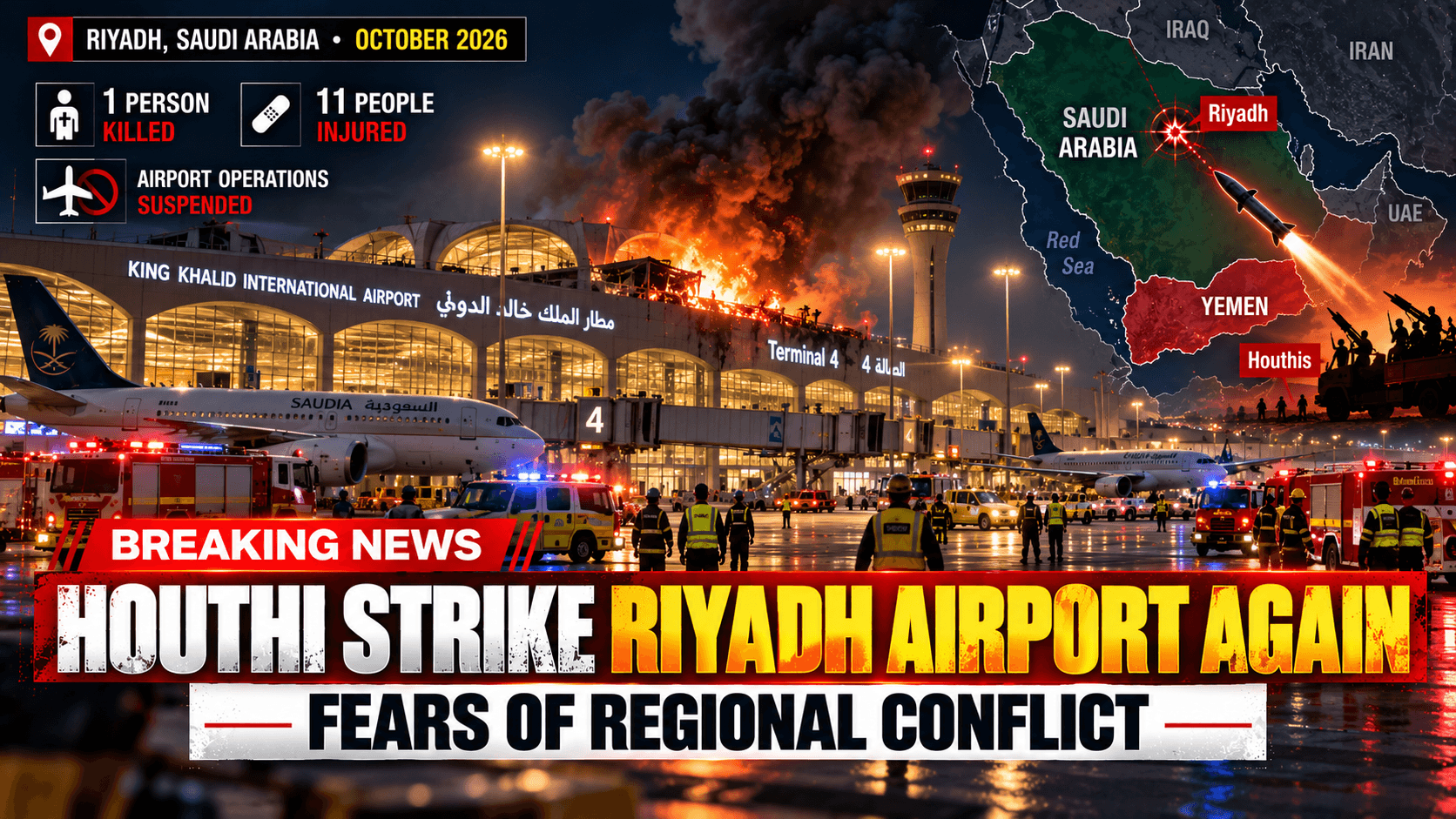
Houthis Strike Riyadh Airport Again, Raising Fears of Regional Conflict
The Houthi movement launched a fresh missile assault on King Khalid International Airport, killing dozens and wounding hundreds. Saudi Arabia vows a strong response as regional tensions rise.