
Understanding the New UPI Merchant Discount Rate Effective Oct 15, 2026
From October 15, 2026, a 0.4% merchant discount rate will apply to certain high‑value UPI transactions, but the cost stays on the merchant side. This guide breaks down what the change means for shoppers, small merchants, and recurring payments.
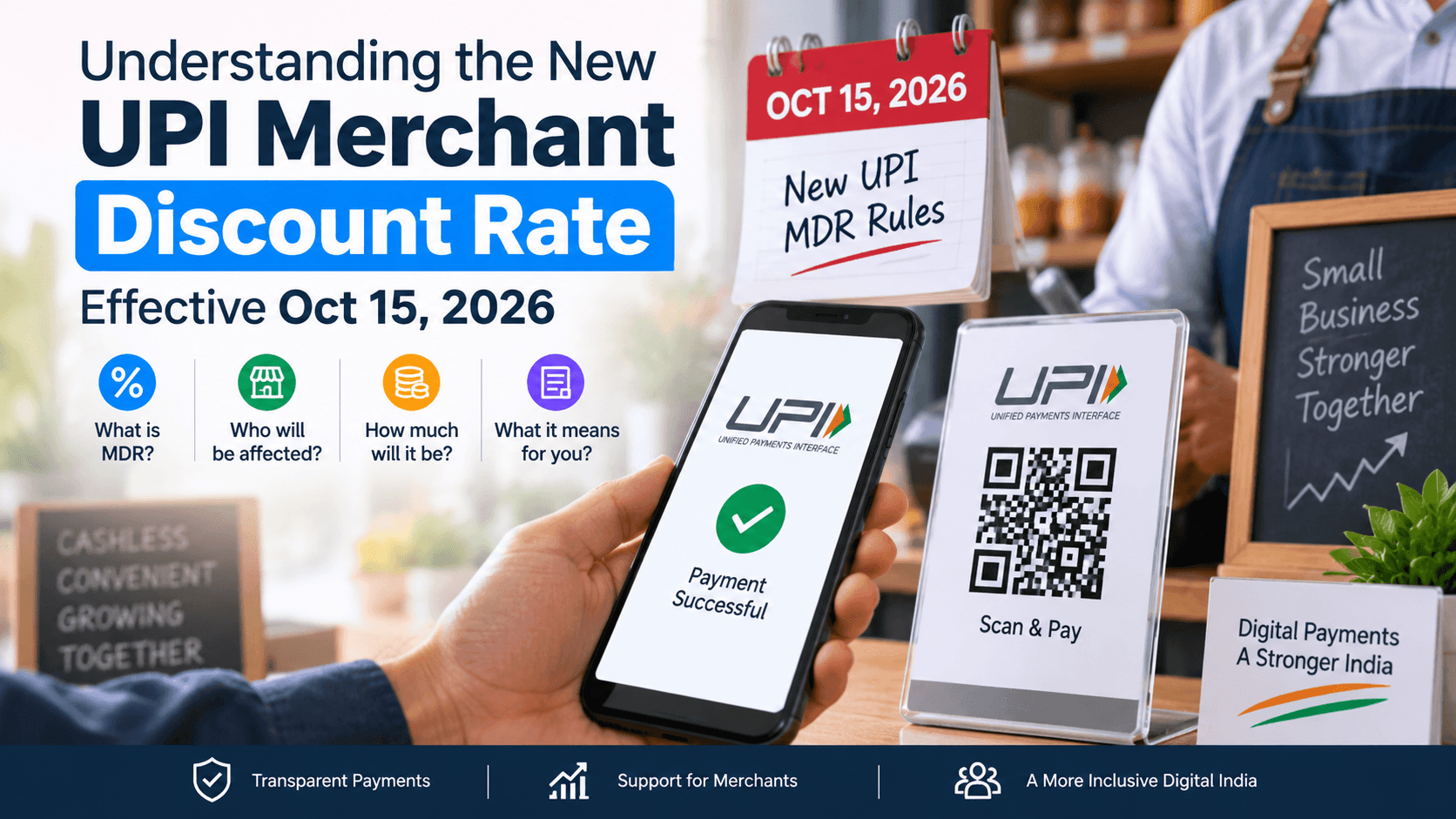
India's Unified Payments Interface (UPI) has long been celebrated for its simplicity: a QR code, a PIN, and the payment is complete—no extra fees appear for the consumer. Starting October 15, 2026, the National Payments Corporation of India (NPCI) will introduce a modest merchant discount rate (MDR) of 0.4% on selected person‑to‑merchant (P2M) transactions above ₹2,000. While the headline sounds like a new charge for users, the fee is absorbed by merchants, leaving everyday shoppers untouched.
Key Takeaways for Consumers
No direct charge for UPI users. The new MDR is a merchant‑side fee; your account balance will reflect only the amount you intend to pay.
Payments up to ₹2,000 remain fee‑free. Transactions below this threshold are excluded from the MDR framework.
P2P transfers stay free. Sending money to friends, family, or between your own accounts continues without cost.
Recurring payments are protected. AutoPay mandates for subscriptions, utility bills, and SIPs do not attract the 0.4% rate.
How the 0.4% MDR Works
The MDR represents the cost a merchant pays to accept digital payments. Effective October 15, the standard rate for qualifying UPI payments will be 0.4% of the transaction value, with a ceiling of ₹300 for any payment of ₹75,000 or more. Below are illustrative examples:
Purchase of ₹3,000 → MDR = ₹12
Purchase of ₹50,000 → MDR = ₹200
Purchase of ₹1,00,000 → 0.4% = ₹400, but capped at ₹300
These amounts are deducted from the merchant’s settlement, not added to the consumer’s bill.
Who Benefits from the Zero‑MDR Provision?
Small businesses that collect up to ₹1 lakh per month via UPI QR codes retain a zero‑MDR status. This exemption covers many street vendors, neighborhood kirana stores, and micro‑enterprises that rely heavily on digital payments but operate on razor‑thin margins. Consequently, a shop receiving a single ₹3,000 payment still pays no MDR, provided its monthly UPI turnover stays below the ₹1 lakh limit.
What Happens If a Merchant Tries to Pass the Fee On?
The new framework explicitly instructs banks to prevent merchants from shifting the MDR to customers. If a retailer lists a product at ₹5,000, the consumer should not be asked to pay ₹5,020 simply because the transaction is processed through UPI. While price adjustments might occur indirectly—businesses may reassess their overall cost structures—the regulation bars any explicit surcharge on the transaction itself.
Specific Sectors with Distinct Rates
Beyond the standard 0.4% rate, NPCI has defined flat‑fee structures for certain high‑volume sectors:
Railways, telecom, insurance, and fuel: ₹5 MDR for payments above ₹2,000.
Utility bills (electricity, water, etc.): also a flat ₹5 for amounts exceeding ₹2,000.
These are merchant‑side fees as well, meaning the consumer’s invoice remains unchanged.
Impact on Recurring and Capital‑Market Payments
Recurring services—OTT subscriptions, monthly utility payments, or systematic investment plans (SIPs)—are exempt from the 0.4% MDR. However, transactions involving capital‑market instruments such as mutual funds, stock brokerage, or securities attract a separate rate of 0.02%, capped at ₹300 per transaction.
Why Introduce the MDR Now?
UPI’s scale has exploded. In August 2026 alone, the platform processed over 24.5 billion transactions, underscoring its role as a backbone of India’s digital economy. Maintaining this massive infrastructure demands continual investment in technology upgrades, cybersecurity, fraud mitigation, and system reliability. The MDR is envisioned as a modest revenue stream to fund these necessities without burdening end‑users.
Industry voices offer mixed reactions. Sarvjeet Singh Virk, CEO of jUMPP, argues that a capped MDR helps sustain the ecosystem while preserving consumer benefits and protecting small merchants. He suggests that a healthier payment model could eventually enable value‑added services for merchants, such as credit access or cash‑flow analytics.
Conversely, the Retailers Association of India warns that even a merchant‑only charge might pressure low‑margin retailers to revert to cash, potentially slowing the digital‑payment adoption momentum among India’s tiniest enterprises.
Frequently Asked Questions
1. Will I see an extra amount deducted from my account?
No. The MDR is settled between the merchant’s acquiring bank and the payment network. Your debit will reflect the exact purchase price you authorized.
2. Does the MDR apply to payments of ₹2,000 or less?
Transactions at or below ₹2,000 are excluded from the standard MDR, so they remain completely fee‑free for both parties.
3. Are there limits on the number of free UPI transactions I can make each month?
There is no new monthly quota introduced. Existing daily and per‑transaction limits—set by banks for security—still apply, but they are unrelated to the MDR.
4. What about UPI AutoPay for my Netflix or electricity bill?
AutoPay mandates continue to be exempt from the 0.4% MDR. You will not encounter any additional charge for recurring services.
5. How will small merchants know if they qualify for the zero‑MDR exemption?
Merchants whose cumulative UPI QR receipt amount stays below ₹1 lakh per month will automatically retain a zero‑MDR status. Their banks and payment processors will reflect this in settlement statements.
Final Thoughts
The introduction of a modest merchant discount rate marks a pivotal shift in India’s digital‑payment landscape. While the fee stays on the merchant side, its ripple effects could influence pricing strategies, merchant‑adoption rates, and the overall sustainability of the UPI network. For consumers, the experience remains largely unchanged: scan, pin, pay—without an extra line item appearing on your statement.
Latest Posts

Teen Arrested After Faulty Rifle Foils Hindu Temple Shooting Plot
A 19‑year‑old Taco Bell employee in Illinois was detained after a jammed rifle prevented a planned mass shooting at a Hindu temple. Police recovered weapons, extremist material, and a manifesto outlining white‑supremacist motives.
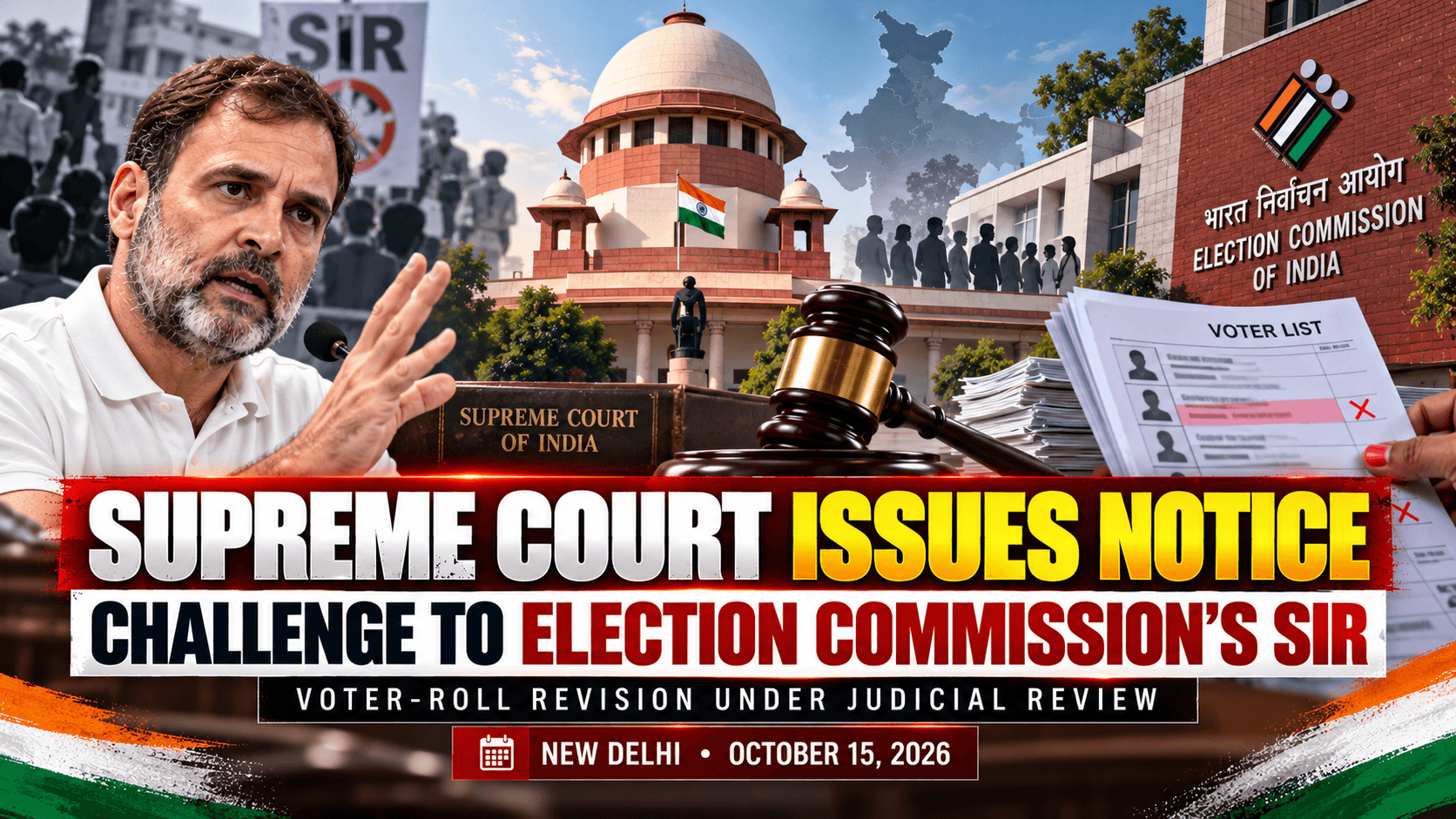
Supreme Court Notices Challenge to Election Commission’s SIR
The Supreme Court has issued a notice on a petition filed by Rahul Gandhi and other opposition figures contesting the Election Commission’s Special Intensive Revision of voter lists. The court’s order seeks explanations from the petitioners and may pause the SIR process pending further review.
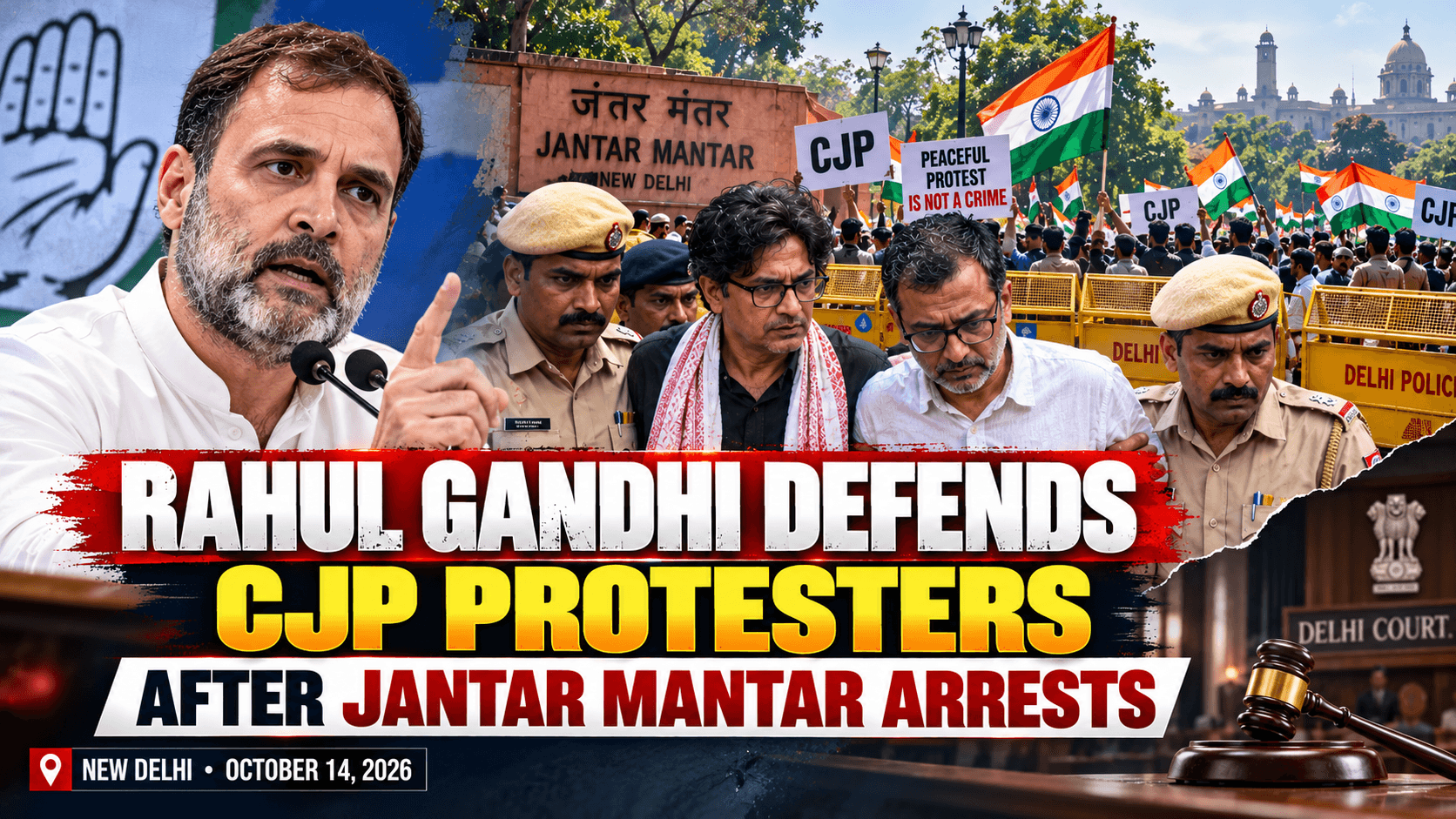
Rahul Gandhi Defends CJP Protesters After Jantar Mantar Arrests
Rahul Gandhi publicly condemned the arrest of Cockroach Janta Party leaders at Jantar Mantar, calling the detention of peaceful flag‑waving protesters a cowardly act. His statement signals a new alignment of opposition forces against the Centre’s decision to de‑notify the historic protest site.
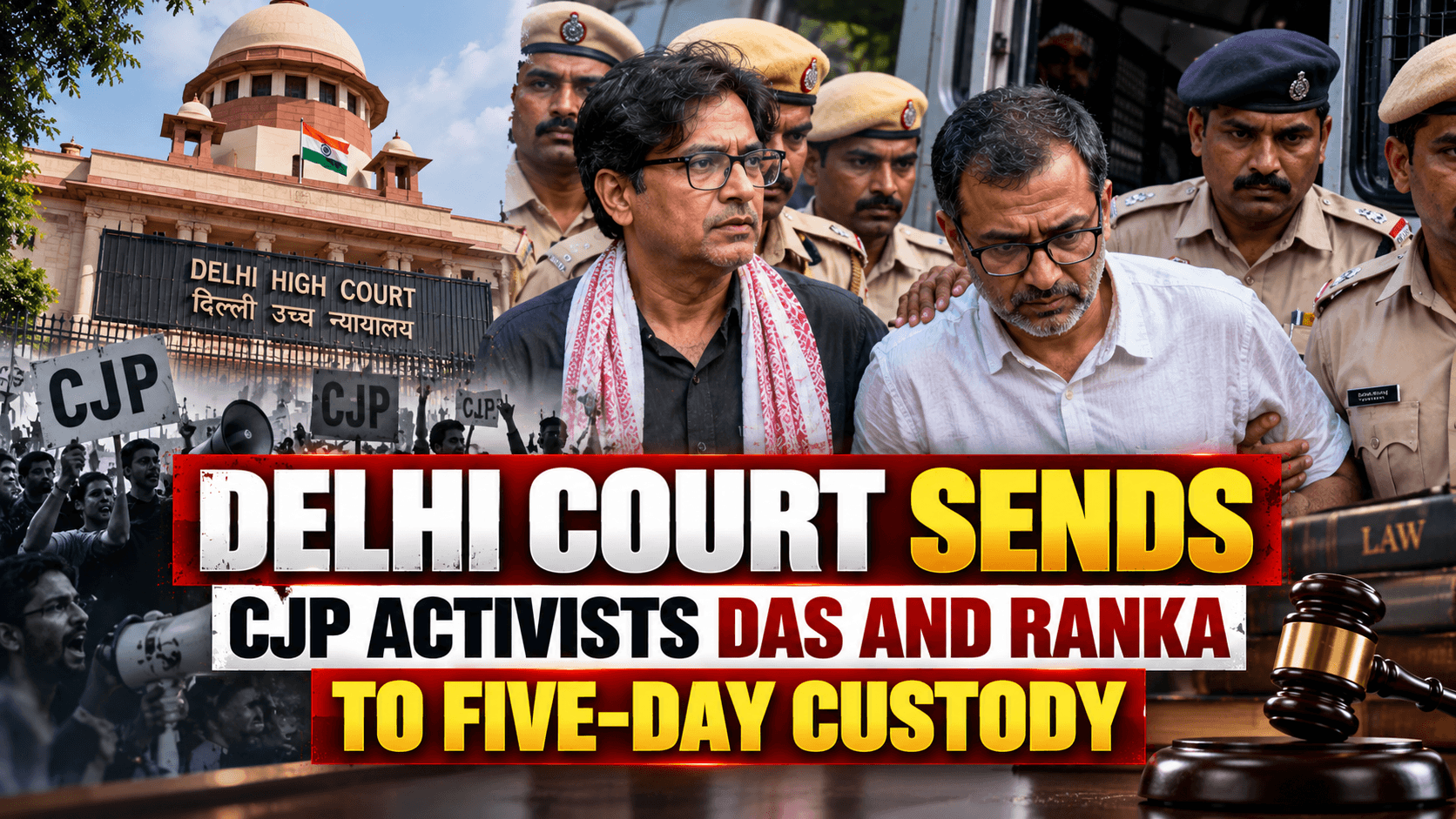
Delhi Court Sends CJP Activists Das and Ranka to Five‑Day Custody
The Special Executive Magistrate court ordered a five‑day judicial custody for CJP leaders Saurav Das and Ashutosh Ranka after they entered the barred Jantar Mantar area. The ruling follows a wave of protests over alleged irregularities in the election roll revision process.

Houthis Renew Missile Barrage on Riyadh, Saudi Air Defences Tested Again
For the third consecutive day the Yemeni Houthi movement launched ballistic missiles toward Saudi Arabia’s capital, prompting interceptions and a renewed shutdown of Riyadh’s main airport. The attacks have strained Saudi air defences, disrupted international flights and raised regional security concerns.

Houthis Strike Riyadh Airport Again, Raising Fears of Regional Conflict
The Houthi movement launched a fresh missile assault on King Khalid International Airport, killing dozens and wounding hundreds. Saudi Arabia vows a strong response as regional tensions rise.