
Pakistan Navy Ship Clips Indian Warship, Sparks Diplomatic Protest
A Pakistani naval vessel brushed against an Indian frontline warship in the North Arabian Sea, prompting New Delhi to summon Pakistan's chargé d'affaires. The clash, occurring in international waters, violated a 1991 maritime agreement and heightened diplomatic tensions between the two neighbors.
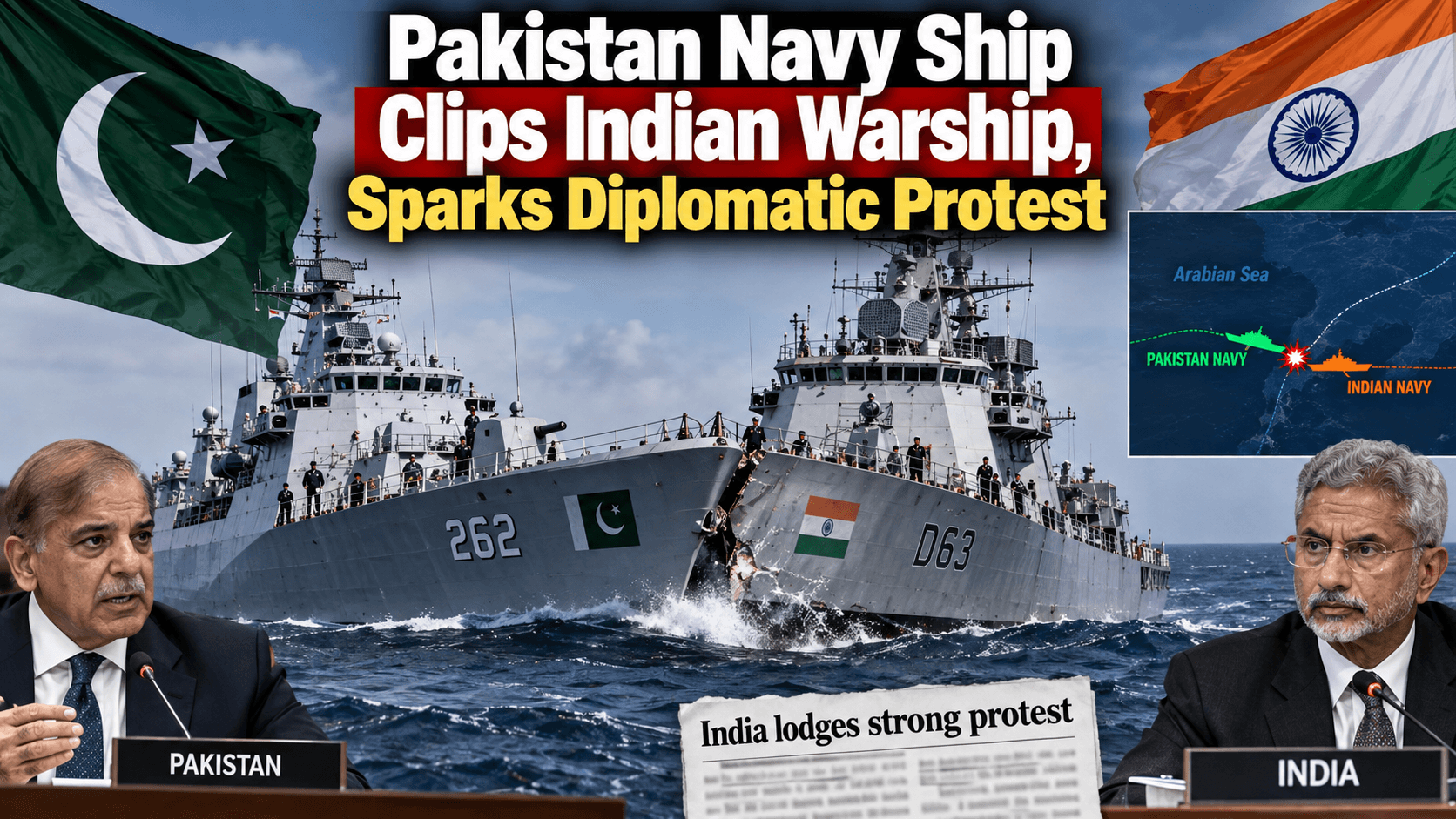
In the early hours of 15 September 2026, a routine patrol by an Indian Navy warship in the North Arabian Sea took an unexpected turn when a Pakistani naval corvette maneuvered dangerously close, resulting in a brief physical contact. While no serious damage was reported, the incident sparked a swift diplomatic backlash from New Delhi, which formally summoned Pakistan's chargé d'affaires to register a strong protest.
Background of the Encounter
Both navies routinely conduct surveillance and training exercises in the Arabian Sea, a region that, despite its strategic importance, remains part of the international maritime domain. The two countries have a longstanding, albeit fragile, framework governing military movements at sea, anchored in the 1991 agreement that obliges each side to provide advance notice of exercises and to adhere to safe navigation practices.
Sequence of Events
According to unnamed naval sources, the Indian vessel was on a standard monitoring mission roughly 220 kilometres east of the Omani coastline when a Pakistani Hunain‑class corvette accelerated toward it at a high rate of speed. Witnesses described the Pakistani ship’s approach as erratic and “unprofessional,” with the vessel reportedly cutting across the Indian warship’s bow before the two hulls made contact.
The seas were reported to be moderately rough, a factor that may have amplified the difficulty of maintaining precise courses. Both ships quickly disengaged after the impact, and no injuries or structural impairments were confirmed by either side.
Diplomatic Fallout
Within hours of the collision, India's Ministry of External Affairs issued a statement condemning the Pakistani navy’s conduct as “unacceptable and unprofessional.” The ministry emphasized that the episode directly contravened Article 10 of the 1991 bilateral agreement, which mandates prior notification of naval manoeuvres and obliges both parties to exercise due caution.
India’s diplomatic response involved summoning Saad Ahmad Warraich, Pakistan’s chargé d'affaires in New Delhi, to the Janpath office of the Foreign Ministry. Warraich was given roughly thirty minutes to convey New Delhi’s protest and to assure that Islamabad would remind its armed forces of the need to respect existing maritime protocols.
Reciprocally, the Indian embassy in Islamabad was instructed to lodge a comparable protest with Pakistan’s Ministry of Foreign Affairs, signaling a mutual desire to prevent any recurrence of such incidents.
Legal and Operational Framework
The 1991 agreement, signed in the aftermath of several maritime standoffs, outlines a set of confidence‑building measures designed to reduce the risk of accidental clashes. Article 10 specifically requires each nation to issue advance notices for any naval exercises, manoeuvres, or troop movements that could affect the other side’s operational environment.
By failing to provide such notice—or by engaging in reckless navigation—the Pakistani corvette arguably breached these stipulated norms. The Indian Foreign Ministry’s statement highlighted this breach, urging Pakistan to reinforce adherence to the agreement among all its military units.
Wider Implications for Indo‑Pak Relations
Although the physical impact was minor, the diplomatic reverberations could be significant. The incident arrives at a time when both countries are navigating a delicate balance of cooperation and competition across multiple fronts, including trade, counter‑terrorism, and climate‑related initiatives.
Analysts caution that even low‑intensity naval encounters can erode trust and complicate broader negotiations. The episode may also prompt both navies to reassess their rules of engagement in contested waters, potentially leading to tighter operational protocols or, conversely, heightened alertness.
Conclusion
The September 2026 brush‑off between a Pakistani corvette and an Indian frontline warship underscores the fragile nature of maritime interactions between the two nuclear‑armed neighbours. While the immediate material damage was negligible, the diplomatic exchange that followed highlights the importance of adhering to established confidence‑building measures. As both capitals continue to navigate their complex relationship, ensuring transparent communication and disciplined conduct at sea will remain essential to averting future incidents.
Latest Posts

Teen Arrested After Faulty Rifle Foils Hindu Temple Shooting Plot
A 19‑year‑old Taco Bell employee in Illinois was detained after a jammed rifle prevented a planned mass shooting at a Hindu temple. Police recovered weapons, extremist material, and a manifesto outlining white‑supremacist motives.

Supreme Court Notices Challenge to Election Commission’s SIR
The Supreme Court has issued a notice on a petition filed by Rahul Gandhi and other opposition figures contesting the Election Commission’s Special Intensive Revision of voter lists. The court’s order seeks explanations from the petitioners and may pause the SIR process pending further review.

Rahul Gandhi Defends CJP Protesters After Jantar Mantar Arrests
Rahul Gandhi publicly condemned the arrest of Cockroach Janta Party leaders at Jantar Mantar, calling the detention of peaceful flag‑waving protesters a cowardly act. His statement signals a new alignment of opposition forces against the Centre’s decision to de‑notify the historic protest site.
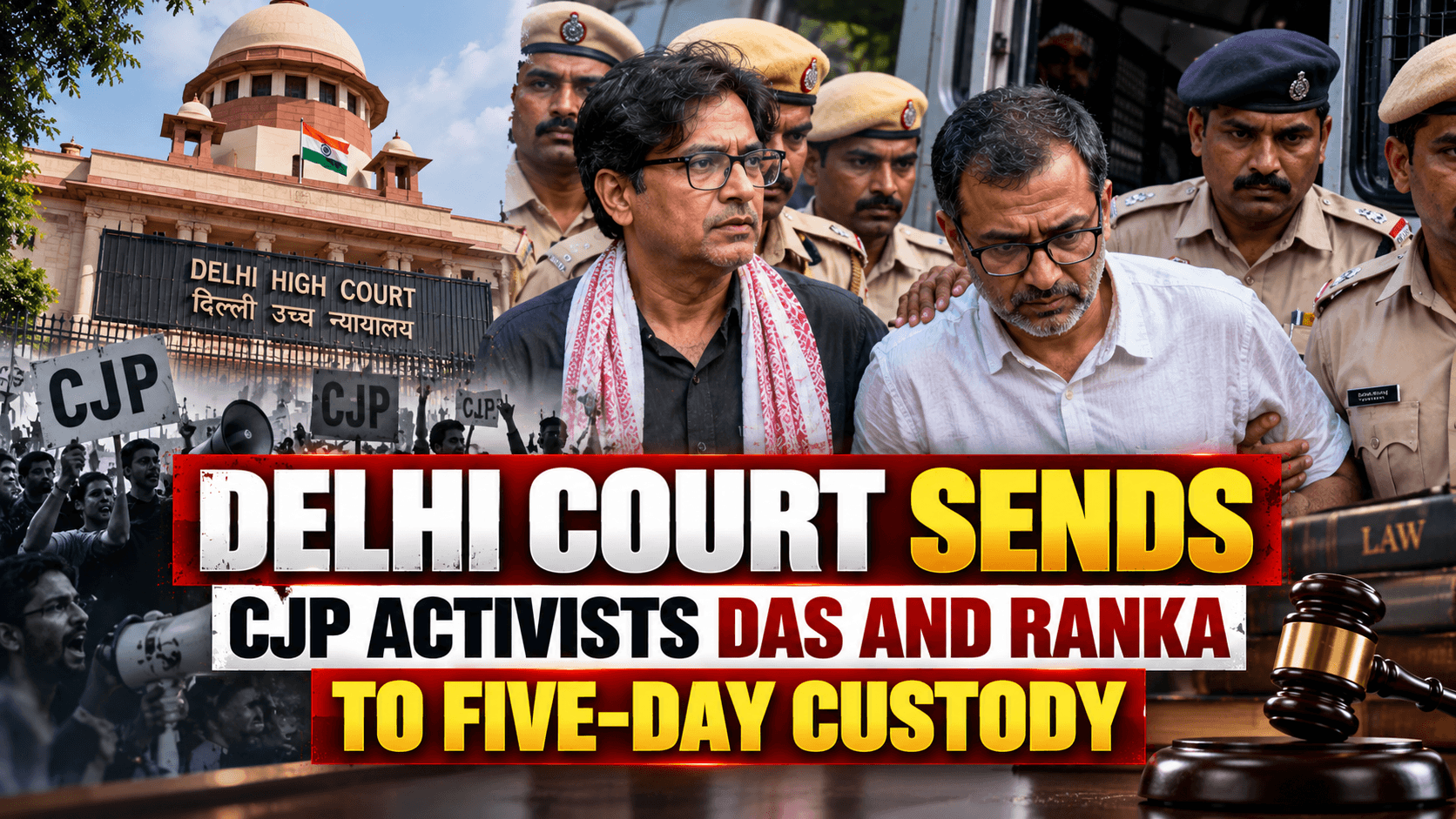
Delhi Court Sends CJP Activists Das and Ranka to Five‑Day Custody
The Special Executive Magistrate court ordered a five‑day judicial custody for CJP leaders Saurav Das and Ashutosh Ranka after they entered the barred Jantar Mantar area. The ruling follows a wave of protests over alleged irregularities in the election roll revision process.
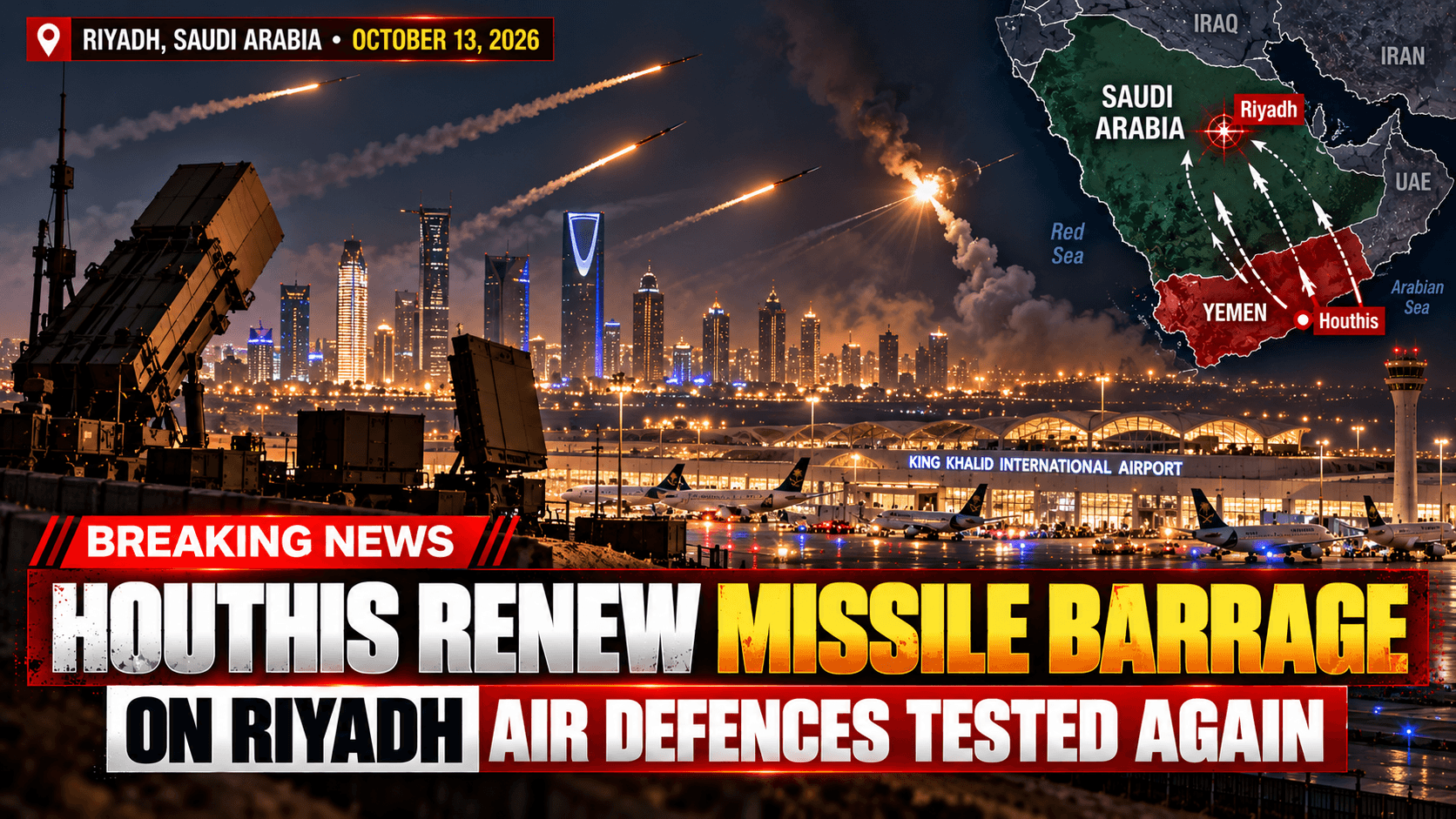
Houthis Renew Missile Barrage on Riyadh, Saudi Air Defences Tested Again
For the third consecutive day the Yemeni Houthi movement launched ballistic missiles toward Saudi Arabia’s capital, prompting interceptions and a renewed shutdown of Riyadh’s main airport. The attacks have strained Saudi air defences, disrupted international flights and raised regional security concerns.
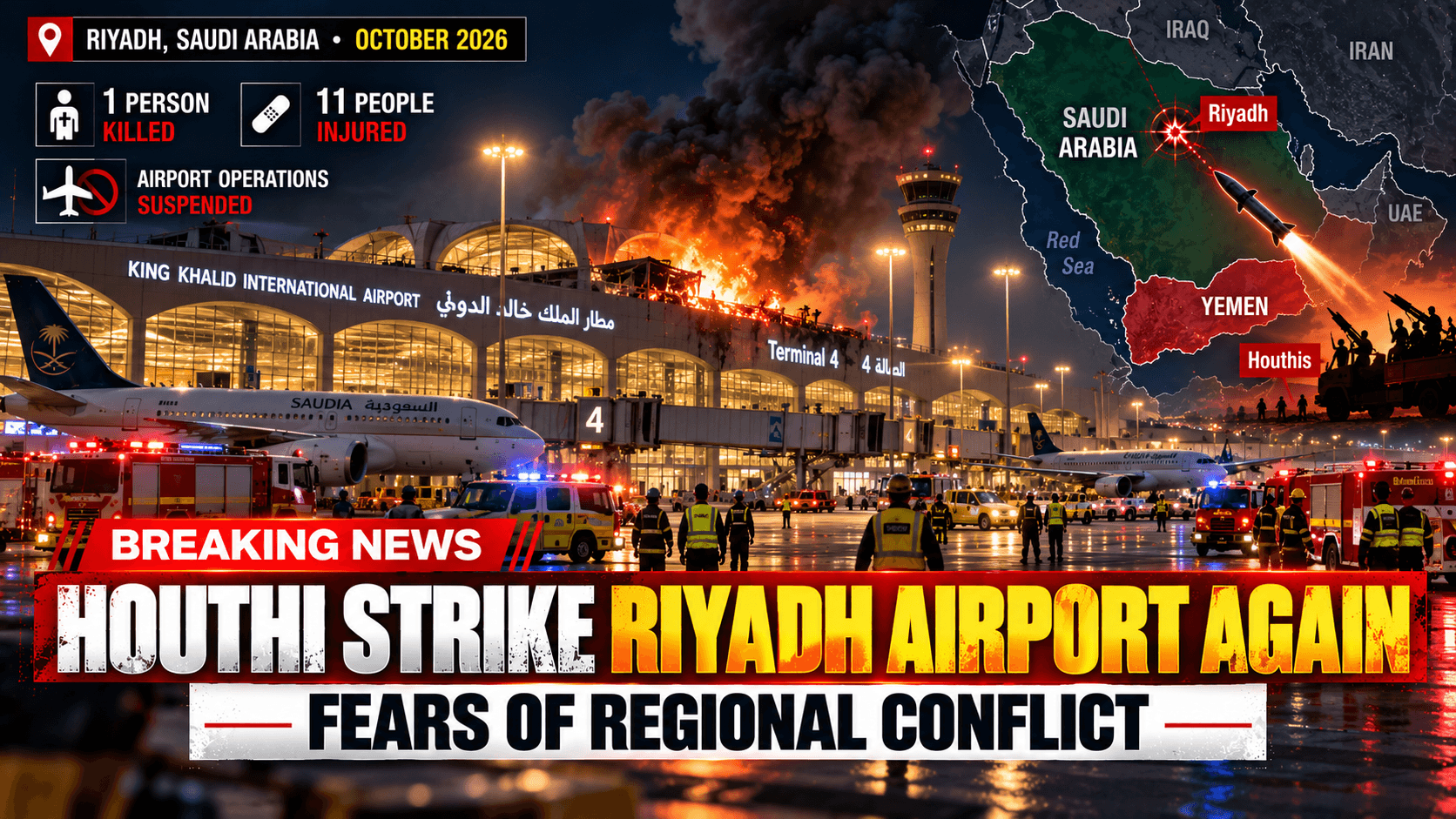
Houthis Strike Riyadh Airport Again, Raising Fears of Regional Conflict
The Houthi movement launched a fresh missile assault on King Khalid International Airport, killing dozens and wounding hundreds. Saudi Arabia vows a strong response as regional tensions rise.